

Cat owners who want to give their pets thoughtful, high-quality meals often start searching for cat food recipes they can make themselves. It is easy to assume that cooking at home is automatically the healthiest feeding approach. For most cats, though, commercially prepared cat food is still the most practical primary diet.
Related option: Picky Eaters.
Related option: Meal Toppers.
Related option: Freeze-Dried Meats.
Related option: Cat.
Related option: Freeze-Dried Large Beef Chunks - High Energy Treat.
Related option: Freeze-Dried Sand Lance - Whole Fish Topper.
Related option: Freeze-Dried Whitebait - Tiny Fish Food Topper.
Related option: Freeze-Dried Salmon Crumbles - Food Topper.
Prepared cat foods are made to address the detailed nutritional requirements cats have. Recreating that balance in a home kitchen can be extremely challenging without guidance from a veterinary nutritionist.
That said, homemade cat food ideas can have a place when used in moderation. They may work as an occasional topper or special treat alongside your cat’s regular food. Below are practical ways to think about homemade options more safely.
The Importance of Feeding Cats a Balanced Diet
Offering an occasional homemade treat can add variety to your cat’s routine and may help keep mealtime interesting. Before adding homemade pet food, however, it is important to understand why a balanced diet matters for cats.
Many homemade cat food recipes do not provide the correct mix of vitamins and minerals cats need. For that reason, homemade foods should not make up most of a cat’s diet, though they can be a useful special-occasion treat or topper.
A 2019 study reviewed 114 homemade cat food recipes from online sources and print books to evaluate whether they were nutritionally adequate. The researchers reported several concerns:
- Only 94 recipes, or 82%, included enough detail to allow a nutritional analysis.
- None of those 94 recipes met the recommended daily allowances for an adult cat diet.
- Forty percent of the recipes did not include feeding directions, such as serving size.
- Seven percent of the recipes included ingredients that could be potentially toxic.
The findings show why homemade cat food can be risky when used as a main diet, whether because of nutritional gaps or unsafe ingredients. To reduce those risks, homemade foods are best used only as occasional additions to a high-quality commercially prepared cat food, which should provide the majority of a cat’s daily intake.
Best Proteins for Natural Cat Food Recipes
If you decide to make an occasional homemade treat for your cat, start with a high-quality protein as the primary ingredient. Protein supplies amino acids, including taurine, that cats need for normal body functions and muscle maintenance. Protein sources vary in quality, so muscle meats and organ meats are practical options to consider.
Here are three protein choices that can work well as a starting point.
Beef
Beef can be a useful protein for a cat treat or supplemental food because it contains several vitamins and minerals. It provides iron, phosphorus, and zinc, along with B-complex vitamins such as vitamin B12 and vitamin B6. These nutrients play roles in normal digestive, nervous system, and immune system function.
Chicken
Chicken is another common protein choice for cats. It is a lean meat and is often considered easy to digest. Chicken organ meats, such as liver, can be nutrient-dense options. If using another cut, choose boneless chicken to avoid bones that could splinter while your cat eats.
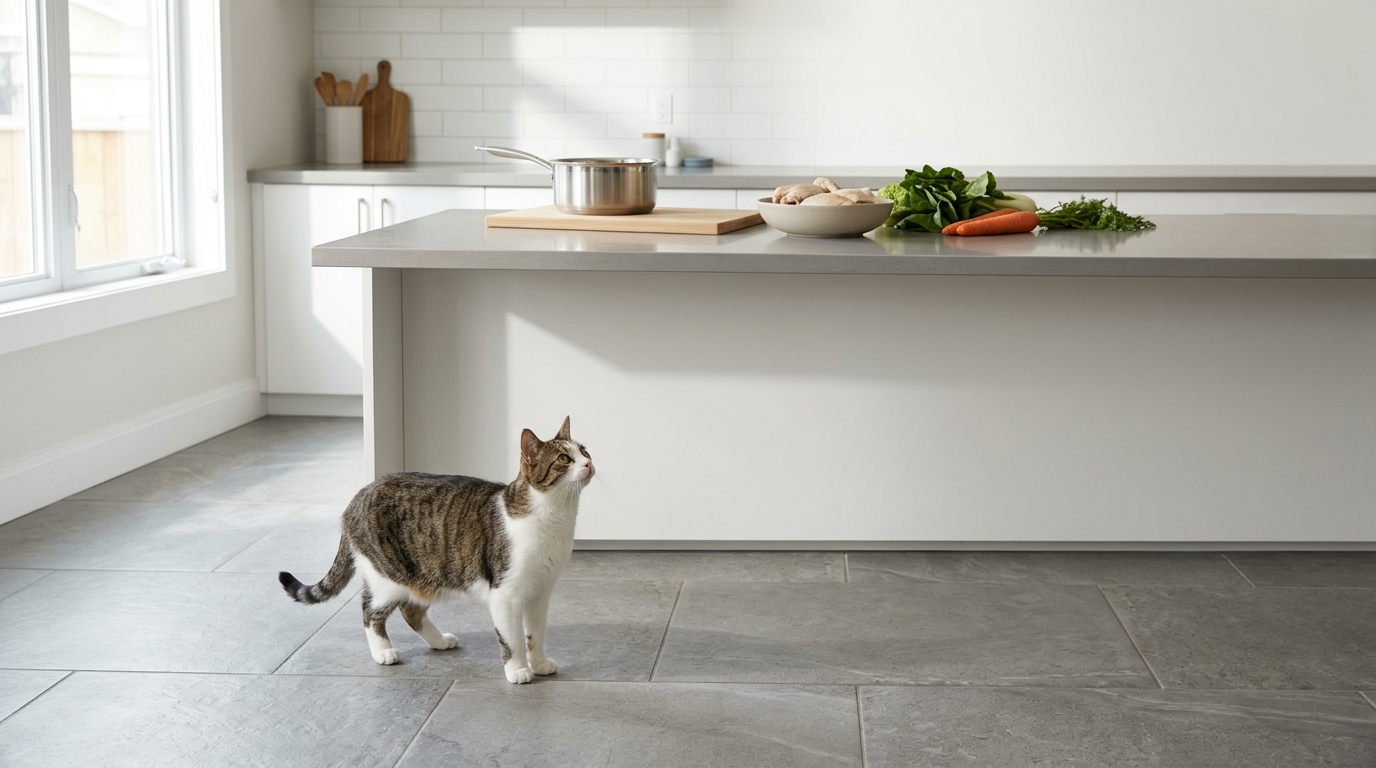
Chicken also provides omega-6 fatty acids, which can help support skin and coat condition. It contains selenium, vitamin B6, and phosphorus, nutrients associated with normal bone, liver, and nervous system function.
Salmon
Salmon contains omega-3 fatty acids, potassium, B vitamins, and niacin. However, fish should be used thoughtfully and in moderation, since too much fish can create nutritional imbalance concerns. Salmon is common in many prepared cat food recipes because it is nutrient-dense, but in those foods it is balanced with other ingredients to help avoid overuse.
How to Safely Prepare Meats for Natural Cat Food Recipes
Food safety matters any time you prepare food for your cat. Making a homemade supplemental food may let you avoid certain unnecessary additives, but unsafe handling can create a more serious problem.
Begin by cooking any protein thoroughly. Raw meat, especially raw chicken, can carry a higher risk of salmonella and other foodborne pathogens. Boiling is one straightforward way to cook meat fully.
For a softer texture, you can process cooked meat with a small amount of water or unseasoned broth until it resembles a wet cat food consistency. Another option is to cook meat slowly with broth so it becomes tender and easier for cats to chew.
If you use broth, choose one that is appropriate for pets rather than a standard grocery-store broth made for people. Human broths often contain seasonings or extra ingredients that may not be safe for cats.
Skip seasonings when preparing meat for your cat. Cats do not need added flavorings, and some seasonings, including garlic and onion, can be dangerous. Seasonings also do not add necessary nutritional value for your cat.
Other Natural Cat Food Ingredients To Consider
Cats are obligate carnivores, but because household cats are not eating a whole prey animal, some recipes include small amounts of carbohydrate-containing ingredients. If you are exploring natural cat food recipes to use as treats, these ingredients may be worth considering.
Broccoli
Broccoli is generally considered safe for cats and can add useful nutrients. It contains carotenoids, fiber, and vitamin C. It also provides antioxidants, which may help support normal immune function. Broccoli can be offered raw or lightly steamed.
Peas
Peas are often considered one of the safer human foods to offer cats. As with any ingredient, watch for individual sensitivities, though they are not common with this vegetable. Peas provide vitamins B, K, and C, and they also contain iron, copper, and potassium.
Cucumbers
Cucumbers are about 95% water, making them a simple way to add moisture to a small snack. They also contain vitamin K, vitamin C, beta carotene, and potassium. Much of a cucumber’s nutrient content is found in the peel and seeds, so leaving the peel on can be useful when offering it to your cat.
Plain Greek Yogurt, Kefir or Cottage Cheese
Plain Greek yogurt, kefir, and cottage cheese contain calcium, phosphorus, and other nutrients. Plain yogurt and kefir may also provide probiotics that can help support digestion. Choose plain options without added sweeteners or pet-unsafe additives.
Cooking and Preparation Tips for Cat Food Recipes
If you plan to offer your cat a homemade recipe, take a careful approach. These tips can help you avoid common mistakes when cooking for cats.
Understand the Risks of Feeding Your Cat an Unbalanced Diet
Using a fully homemade diet makes it very difficult to meet all of a cat’s nutritional needs. A commercial diet is generally the most reliable way to provide the correct nutrient balance. If you are considering significant homemade feeding, speak with a veterinary nutritionist about your cat’s daily nutrient needs, then choose a high-quality prepared cat food that fits those requirements.
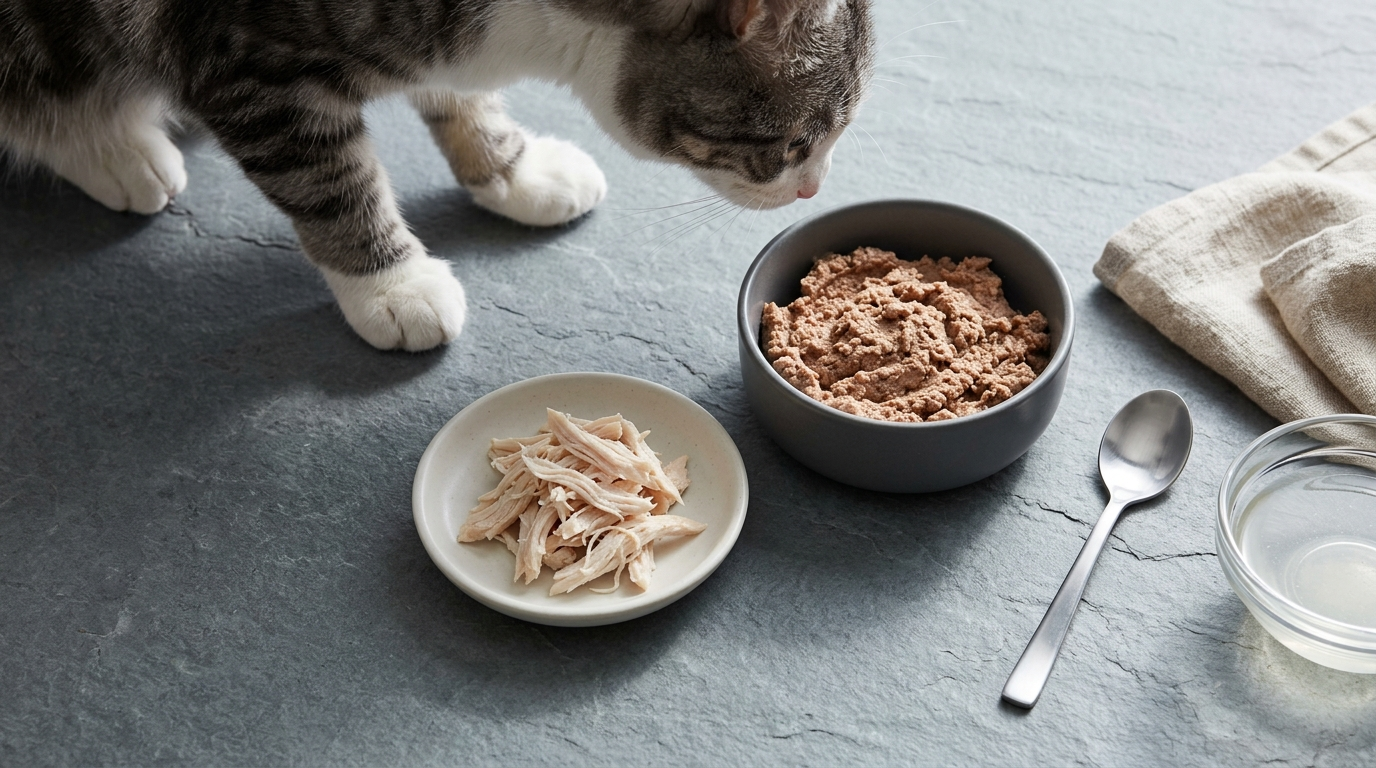
If you use home-cooked foods as a topper for your cat’s formulated food, keep portions moderate so the additions do not lead to overfeeding.
Clean Areas Thoroughly When Cooking for Cats
Use careful kitchen-cleaning practices when preparing food for cats. This helps reduce the chance of exposing your cat to unsafe foods or spices and lowers the risk of cross-contamination from raw meats prepared in the same area.
Our 2 Favorite Cat Food Recipes
If you want a more involved option using human food ingredients as a topper for your cat’s regular meal, the two ideas below can be useful examples. They are not intended to replace a complete and balanced diet for your cat.
1) Sardine Salad
Sardine salad can work as a topper for nutritionally balanced pet food. Sardines provide fatty acids found in fish oil, while green beans and cantaloupe add carbohydrates, fiber, and vitamins. The preparation time is also short, making it a quick occasional option.
A sardine salad recipe for cats and dogs can be used as a reference if you want a simple topper-style preparation.
2) Simple Butternut Squash Soup
Butternut squash can be blended with a pet-safe beef bone broth for a savory seasonal treat. It can be poured over your cat’s normal food or served in a small bowl as an occasional snack. This simple recipe adds nutrients such as calcium, magnesium, vitamin A, and vitamin B6 from the squash.
A simple butternut squash soup recipe can be a helpful starting point for this style of cat-friendly topper.
Try a Human Grade Cat Food From The Honest Kitchen
Cooking for your cat can be enjoyable, but making cat food at home is not necessary if you have access to a complete and balanced prepared cat food made with wholesome ingredients and without unnecessary fillers or feed-grade by-products.
Prepared cat food recipes developed with veterinary nutrition input can offer a more dependable way to provide balanced nutrition. Foods made with carefully selected proteins and an appropriate nutrient profile may help support your cat’s everyday dietary needs.
If you are interested in changing or adding to your cat’s diet, review high-quality cat food options for adult cats and speak with your veterinarian for guidance that fits your pet.
Health Disclaimer: This article is educational and is not a substitute for veterinary advice. Consult your veterinarian or another qualified pet health professional for guidance specific to your cat.
The Cat Lover’s Guide to Human Grade Cat Food
Make treat time more fun
Explore natural treats and serving ideas for more joyful everyday bonding.
Shop Treats