

Feeding a cat an appropriate diet is one practical part of supporting their daily well-being. Cats require particular nutrients in suitable proportions to grow, maintain body tissues, stay active, and support normal recovery from everyday stress, illness, or injury.
Related option: Veggie Fruits & Meat.
Related option: Meal Toppers.
Related option: Freeze-Dried Meats.
Related option: Dog.
Related option: Freeze-Dried Pork Brain - Nutrient-Rich Organ Treat.
Related option: Freeze-Dried Salmon Crumbles - Food Topper.
Related option: Chicken Fruit & Veggie Sticks - Balanced Daily Nutrition.
Related option: Freeze-Dried Salmon Bone - Natural Calcium.
Because food plays such an important role in a cat's routine, it helps to understand what to look for when comparing cat foods. This guide explains the main nutrients cats need and how those nutrients appear in a complete diet.
Cat Nutrition 101: What Are the Essential Cat Nutrients?
Nutrients are parts of the diet that carry out particular functions in the body. Cats may obtain the same nutrient from many different ingredients. For instance, calcium may come from bone, bone meal, dairy ingredients, organ tissue, meat, legumes, or an added mineral source.
Dietary nutrients are generally grouped into six categories:
- Protein
- Fat
- Carbohydrate
- Vitamin
- Mineral
- Water
Energy is not technically classified as a nutrient, but it remains an essential consideration when evaluating a cat's diet. Measured in kilocalories, or calories, dietary energy comes from fat, protein, and carbohydrates.
Which Cat Foods Have All the Essential Nutrients?
One practical way to check whether a food is intended to provide all required nutrients is to look for an Association of American Feed Control Officials, or AAFCO, nutritional adequacy statement on the label.
The statement will generally indicate one of two things: that feeding tests using AAFCO procedures support complete and balanced nutrition for a specified life stage, or that the food was formulated to meet the nutrient levels established by the AAFCO Cat Food Nutrient Profiles. The listed life stage may be adult maintenance, growth and reproduction, or all life stages.
With that label information in mind, it is useful to examine what each nutrient contributes to a cat's diet.
Protein in Cat Food
Cats are carnivores and generally require a relatively high proportion of protein compared with many other animals. Protein contributes to the development and maintenance of muscle, skin, fur, nails, tendons, ligaments, cartilage, enzymes, hormones, antibodies, and other body structures and substances.
Protein also serves as an important energy source for cats.
Plant vs. Animal Protein
Animal-based protein supplies nutrients that cats need from their diet. During digestion, protein is separated into smaller building blocks called amino acids. The cat's body then uses those amino acids to assemble the proteins needed at a particular time.
Cats can produce many amino acids from other amino acids; these are called nonessential amino acids. However, 11 essential amino acids must be supplied through the diet:
- Arginine
- Histidine
- Isoleucine
- Leucine
- Lysine
- Methionine
- Phenylalanine
- Taurine
- Threonine
- Tryptophan
- Valine
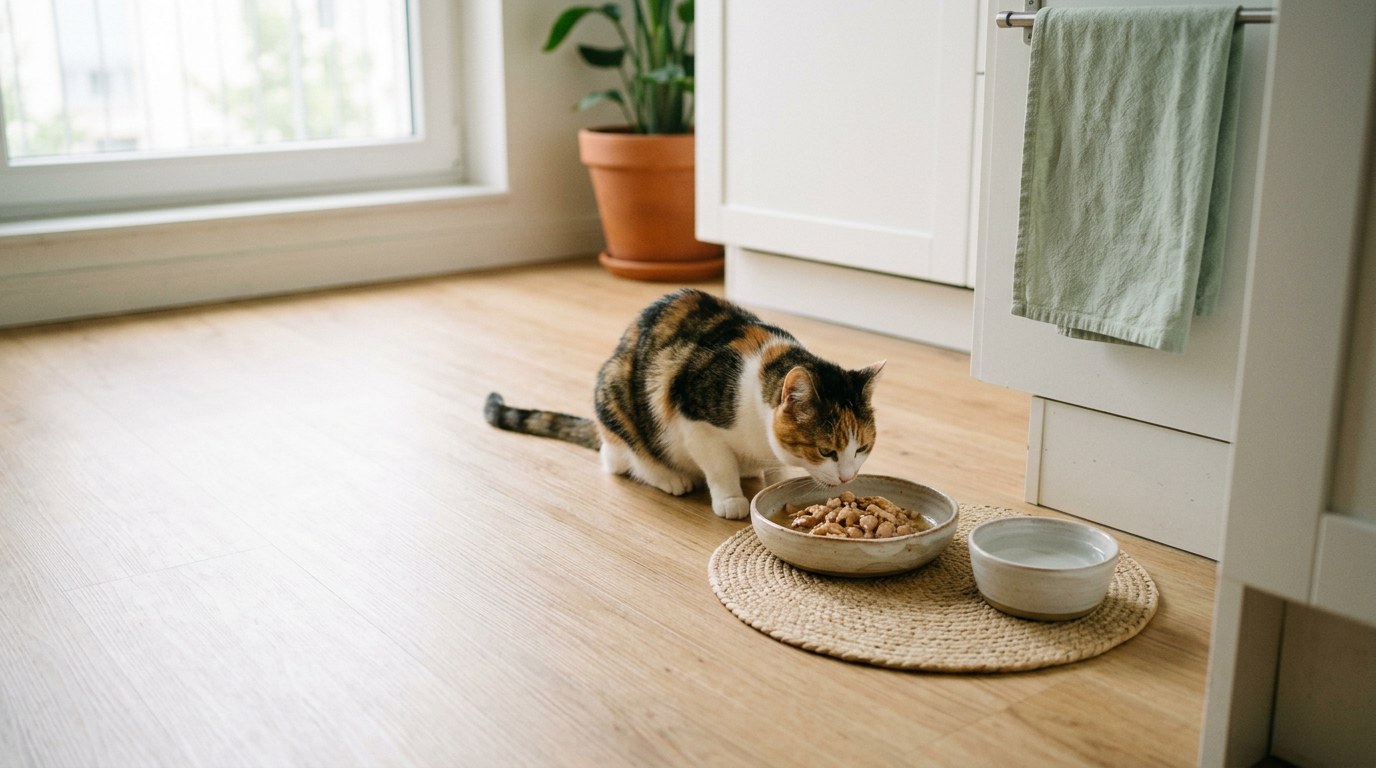
Meat and other animal tissues are useful sources of these essential amino acids and other nutrients cats require. This fits with the type of food available from the prey animals that cats evolved to consume.
What Does Crude Protein Mean?
Protein, particularly protein from animal sources, can be a comparatively costly part of a formula. Some manufacturers may formulate foods close to the minimum protein level needed for survival rather than using a higher amount.
The guaranteed analysis on a cat food label should include its crude protein percentage. Crude protein is an estimate based on the amount of nitrogen measured in the food.
Crude protein percentages can help you compare the protein content of different foods, but the comparison is not direct when one food is dry and another is wet. You must account for moisture before comparing them, and additional calculations are needed to determine how a food's protein level compares with a cat's dietary needs.
How Much Protein Does My Cat Need?
For a cat food to be considered complete and balanced under the cited AAFCO profiles, adult-maintenance formulas must contain at least 26% crude protein on a dry matter basis. The minimum for growth and reproduction is 30%.
Most labels provide crude protein on an as-fed basis. To convert that number to a dry matter percentage:
- Find the moisture percentage in the guaranteed analysis and subtract it from 100. The result is the food's dry matter percentage.
- Divide the crude protein percentage by the dry matter percentage, then multiply by 100.
- The final figure is the crude protein percentage on a dry matter basis.
Protein levels above the applicable minimum may be a useful consideration for cats, depending on the overall formula and the individual animal. Research has found that cats allowed to choose among foods often select diets providing approximately half of their calories from crude protein.
Can Cats Be Allergic to Certain Proteins?
Protein is not automatically better in unlimited amounts or from every source. In particular, a high intake of lower-quality protein may worsen signs associated with kidney disease in cats.
Protein ingredients are also the most common triggers of food allergies in cats. If a cat has an ongoing health concern or a suspected food reaction, discuss appropriate food choices with a veterinarian.
Fat in Cat Food
Protein can provide energy, but fat is the most concentrated source of dietary energy. Fat also helps transport certain substances and supports the transmission of nerve impulses.
Essential omega-3 and omega-6 fatty acids are relevant to skin and coat maintenance, wound healing, and the body's inflammatory processes.
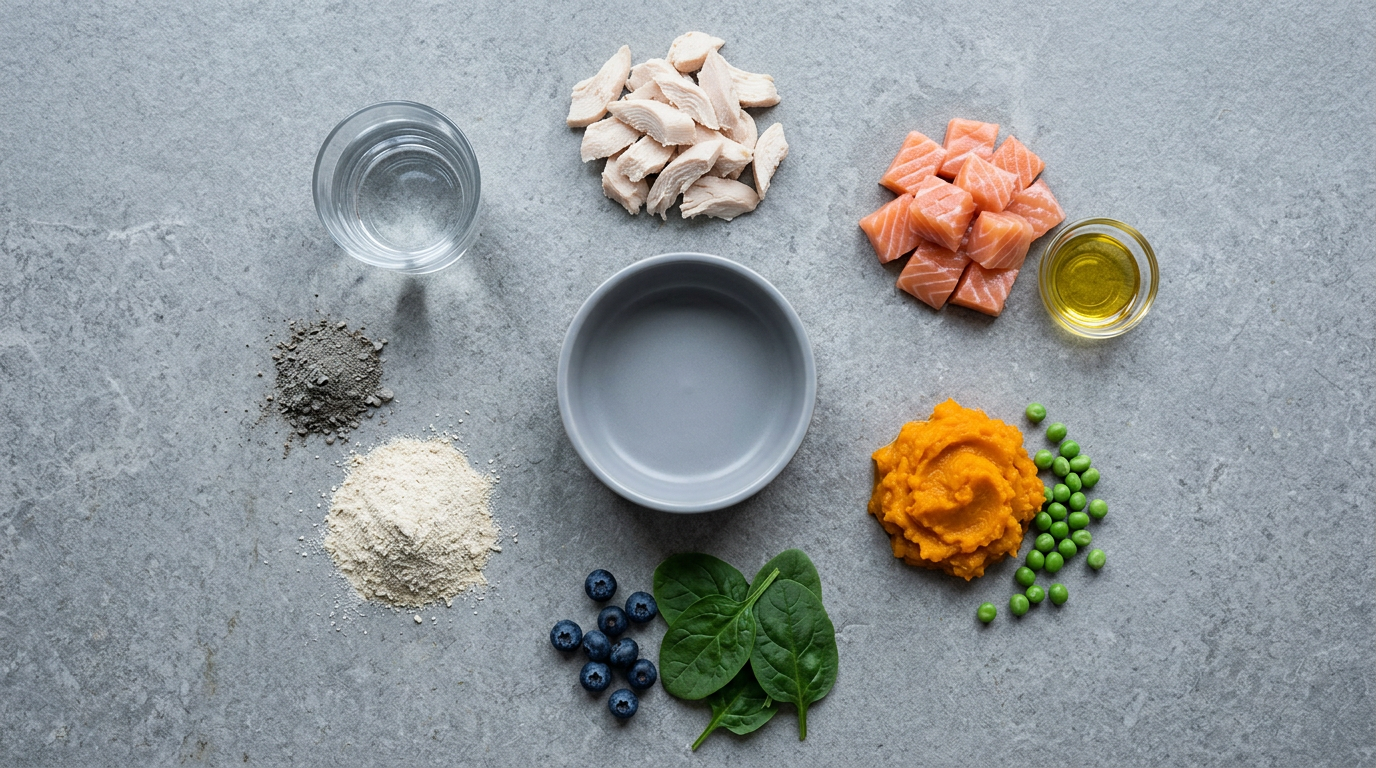
Sources of Fat
Ingredients such as salmon, chicken, liver, and beef naturally contain fat and essential fatty acids when they are included in a cat food.
Manufacturers may also add a separate fat ingredient. In that case, the ingredient list might identify sources such as beef fat, fish oil, or soybean oil.
What Does Crude Fat Mean?
The guaranteed analysis on the package lists a cat food's crude fat percentage. This figure is an estimate obtained by extracting the fats in the food with ether.
How Much Fat Does My Cat Need?
The cited AAFCO minimum for fat in cat foods is 9% on a dry matter basis.
A food with a substantially higher fat level may be suitable for a highly active cat or one that has difficulty maintaining body weight. In contrast, foods designed for weight management generally contain less fat than adult-maintenance formulas.
Carbohydrates in Cat Food
Carbohydrates are a major energy source for many animals. Cats, however, evolved to obtain much of their energy from protein and fat.
Cats can digest limited amounts of carbohydrate and use it for energy, but carbohydrates generally represent a smaller part of the feline diet.
Sources of Carbohydrates
Large amounts of carbohydrate are not typical of the foods cats evolved to eat and may contribute to weight gain and associated health concerns, including diabetes.
Research also suggests that some cats with food allergies may react poorly to particular carbohydrate ingredients, although reactions to carbohydrates appear less common than reactions to ingredients such as beef, chicken, or fish.
How Many Carbs Does My Cat Need?
A commonly cited target is for cats to receive less than 10% of their calories from carbohydrates.
Dry foods need a comparatively high amount of carbohydrate to hold their shape, so reaching this level may only be possible with wet foods. Feeding wet food exclusively is one straightforward way to reduce the amount of carbohydrate in a cat's diet.
Vitamins in Cat Food
Vitamins are organic compounds, meaning they contain carbon, that the body needs in small dietary amounts. Many enzymes, which help chemical reactions take place, depend on vitamins to support normal feline metabolism.
Sources of Vitamins
Animal tissues, vegetables, fruits, vegetable oils, seeds, and grains can all provide vitamins in a cat food formula.
Even so, it is difficult to supply every vitamin a cat needs at the correct level using ingredients alone. For that reason, the manufacturing process commonly includes a vitamin supplement.
Which Vitamins Do Cats Need?
The AAFCO nutrient profiles identify the following vitamins and vitamin-related nutrients for cat foods:
- Vitamin A: Supports vision, bone and tooth development, reproduction, and the maintenance of skin and mucous membranes.
- Vitamin D: Helps regulate blood calcium and phosphorus levels, which are involved in bone growth and maintenance.
- Vitamin E: Functions as an important antioxidant.
- Vitamin K: Is needed for normal blood clotting.
- Thiamin: Contributes to carbohydrate metabolism.
- Riboflavin: Helps release energy from carbohydrates, fats, and proteins.
- Pantothenic acid: Is involved in the metabolism of carbohydrates, fats, and some amino acids.
- Niacin: Helps the body process fats, carbohydrates, and protein.
- Pyridoxine: Supports the metabolism of amino acids, glucose, and fatty acids.
- Folic acid: Is needed for DNA synthesis and for processing the amino acid methionine.
- Biotin: Helps the body make fatty acids, certain amino acids, and DNA and RNA.
- Vitamin B12: Is required for fat and carbohydrate metabolism and nerve conduction.
- Choline: Serves roles as a neurotransmitter, a component of cell membranes, and a participant in lipid transport.
Do Cats Need Vitamin Supplements?
A healthy cat eating a food labeled as complete and balanced generally does not need an additional vitamin supplement. In some situations, adding vitamins without professional guidance may be harmful.
Speak with a veterinarian before giving a cat a vitamin supplement or changing the cat's diet for a specific nutritional reason.
Minerals in Cat Food
Minerals are inorganic compounds, meaning they do not contain carbon, that the body needs in the diet to carry out normal functions.
Sources of Minerals
Some minerals come from animal or plant ingredients, including sources such as bone meal. To make a formula complete and balanced, manufacturers commonly also add specific mineral supplements.
A healthy cat eating food with an AAFCO nutritional adequacy statement generally should not need extra mineral supplementation beyond the food itself.
Which Minerals Do Cats Need?
According to the AAFCO profiles, cat food must supply the following minerals in sufficient amounts:
- Calcium: Helps maintain and develop bones and teeth and acts as an intracellular messenger.
- Phosphorus: Supports bone and tooth maintenance and is involved in normal metabolism.
- Potassium: An electrolyte involved in nerve function, muscle contraction, and heart rhythm.
- Sodium and chloride: Electrolytes that contribute to hydration, acid-base balance, nerve signaling, and muscle contraction.
- Magnesium: Supports enzyme activity and the metabolism of carbohydrates, protein, and fats.
- Iron: Is needed to transport oxygen through the body.
- Copper: Contributes to iron absorption and transport, skin pigmentation, and skeletal growth.
- Manganese: Has roles in metabolism, immune function, bone formation, and antioxidant activity.
- Zinc: Is involved in carbohydrate, lipid, protein, and nucleic acid metabolism.
- Iodine: Is needed to make thyroid hormones.
- Selenium: Acts as an antioxidant in conjunction with vitamin E.
What Are Chelated Minerals?
Minerals are inorganic substances, and some can be difficult for an animal to absorb from food.

During chelation, a mineral is attached to an organic substance such as an amino acid. Chelated minerals may be easier for cats to absorb and use than minerals that are not chelated.
Water in Cat Food
Water is another essential part of feline nutrition and may be the most important nutrient to consider.
Water makes up much of a cat's body and participates in nearly every metabolic function. Domestic cats evolved to obtain most of their water through food rather than by drinking frequently from a bowl.
Cats will often tolerate a greater degree of dehydration before seeking water than dogs. The cited comparison is approximately 8% dehydration in cats versus 4% in dogs.
What Is Water Sufficient for Processing?
Whole meats and some other ingredients naturally contain substantial water. Commercial cat food may also have water added during manufacturing to make the ingredients easier to mix. The ingredient list may describe this as water sufficient for processing.
Much of that added water is later removed from dry foods, which helps make them more shelf stable.
How Much Water Does My Cat Need?
Healthy cats generally need about 4 to 5 ounces of water for every 5 pounds of body weight. This estimate includes water obtained from food as well as water consumed from a bowl.
A cat eating only canned food may drink very little additional water because the food itself supplies a substantial amount.
Can I Make My Own Nutritional Cat Food?
For many households, feeding a high-quality canned food with an appropriate nutritional adequacy statement is a straightforward way to provide a cat's required nutrients.
Homemade cat food can also be a nutritious option, but preparing it properly requires considerable additional time, effort, and expense.
Anyone considering a homemade diet should arrange a consultation with a veterinary nutritionist. Services operated by veterinary nutritionists may also help develop or evaluate a recipe.
Recipes found online or in books should not be assumed to be complete and balanced. Research has found that such recipes are rarely sufficient in every nutrient a cat needs.
Explore real-ingredient treats
Choose simple, natural rewards made to support everyday happy, healthy treat moments.
Shop Natural Treats