

If your cat likes to hover around the table at mealtime, sharing a small bite can be tempting. But not every food made for people is appropriate for cats. Some common foods can be offered safely in small amounts, while others may upset your cat's stomach or pose a serious risk.
Related option: Veggie Fruits & Meat.
Related option: Meal Toppers.
Related option: Freeze-Dried Meats.
Related option: Dog.
Related option: Freeze-Dried Lamb Liver - Nutrient Dense Organ.
Related option: Chicken Fruit & Veggie Sticks - Balanced Daily Nutrition.
Related option: Chicken Wrapped Beef Knee Cap - Safe Bone.
Related option: Freeze-Dried Mini Chicken Necks - Soft Bone.
Human foods should be treated as occasional extras, not a meaningful part of your cat's daily nutrition. The guidance below is intended for healthy cats. If your cat has a medical condition, takes medication, or eats a prescription diet, ask your veterinarian before introducing people food.
These are some people foods that are generally more suitable for cats when prepared carefully.
Meats for Cats
Among human foods cats may eat, plain cooked meat is often the most straightforward option. Cats are obligate carnivores, meaning their bodies are built to use nutrients from animal-based foods and they need meat in their diet.
Most complete commercial cat foods are built around animal protein. For treat-style feeding, cooked meat can be a practical, nutrient-dense choice, as long as a few safety rules are followed:
- Do not offer raw meat, because it can carry organisms that may make your cat sick.
- Avoid meat with bones, which can injure the mouth or digestive tract.
- Check with your veterinarian if you are unsure whether a specific food is appropriate for your cat.
Chicken and Turkey
Chicken and turkey are flavors many cats enjoy. They are also protein-rich and tend to be relatively low in calories when served plain and lean.
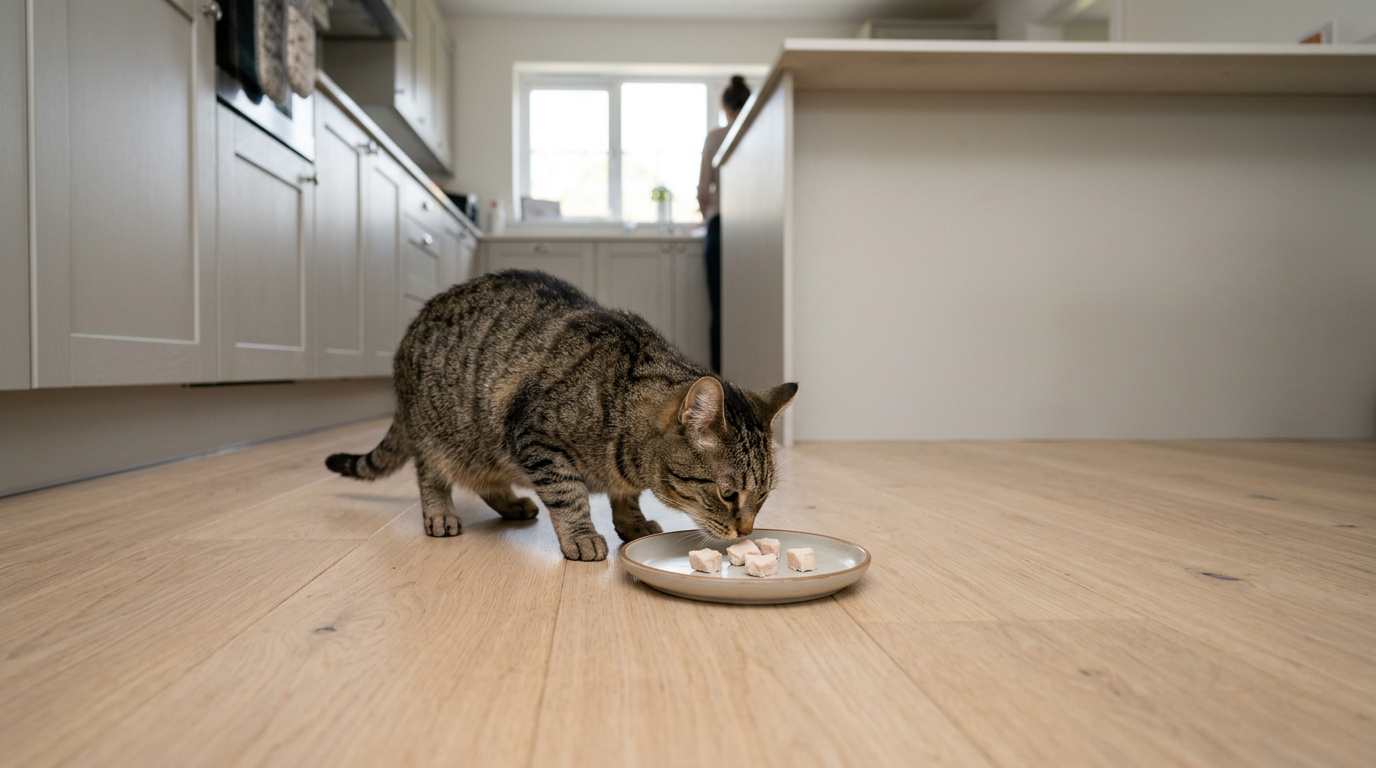
Any poultry given to a cat should be fully cooked. Baking or boiling are good preparation methods, while deep-fried foods should be avoided. Remove all skin and bones, and do not season the meat with herbs, butter, oils, salt, or other flavorings.
Keep servings modest. A 1-inch cube is already a generous snack for a cat. For many healthy cats, a small bite of plain cooked chicken or turkey may be offered as a daily treat. If your cat has health concerns or eats a prescription food, speak with your veterinarian before feeding human foods.
Fish
Fish is another people food many cats find appealing. Most types of fish can be offered as an occasional cat snack if they are cooked all the way through and served without skin or bones.
Fish can provide lean protein. Oilier fish, such as mackerel and tuna, also contain omega-3 fatty acids, which may be useful to discuss with your veterinarian for cats with certain health needs. White fish, such as cod or sole, does not provide the same level of oily-fish fats.
As with any new food, ask your veterinarian before adding fish to your cat's routine. For a healthy cat, a 1-inch cube of properly prepared fish can be a reasonable small treat. Salmon and tuna are common favorites, and fish oil supplements are another topic to raise with your veterinarian if you are considering them.
Beef
Beef is also a flavor many cats like, and plain cooked beef can be offered as a treat for healthy cats. Choose lean cuts, trim away excess fat, remove any bones, and cook the meat thoroughly without added seasoning.
As with poultry and fish, a 1-inch cube of fully cooked beef is an appropriate snack-sized serving for many healthy cats.
Vegetables for Cats
Cats do not need vegetables in the same way people do. Because cats are obligate carnivores, they are not especially well suited to digesting and using plant foods, so it is fine if your cat is not interested in vegetables.
If your cat does show curiosity about vegetables, certain plain cooked options may be offered in very small amounts. These should remain occasional, low-volume snacks. Watch your cat afterward for signs of digestive upset, since some cats do not tolerate greens or other vegetables well.
Broccoli
Some cats may accept a small piece of broccoli now and then. Offer only plain broccoli that has been thoroughly cooked. Steaming can soften broccoli and make it easier to chew and digest while preserving many of its nutrients.
Because broccoli contains fiber, it may affect stool quality in some cats. Keep the serving very small: about a 1/2-inch cube of cooked broccoli once or twice per week.
Peas
Peas may be steamed, boiled, or baked, provided they are served completely plain. Do not add salt, butter, sauces, or other toppings. Portions should stay tiny; three or four peas once or twice weekly is enough. Monitor your cat for vomiting, diarrhea, or other signs that the food did not agree with them.
Sweet Potatoes
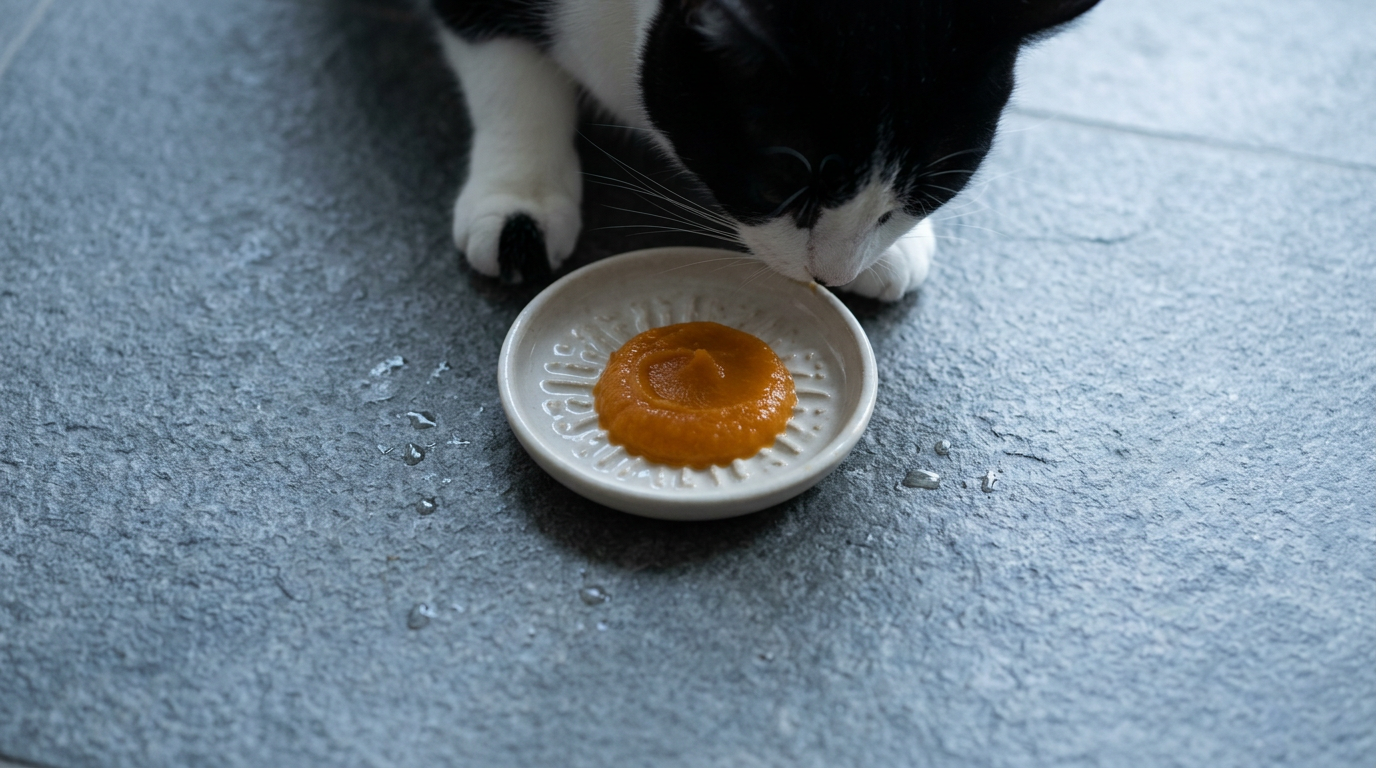
Cooked sweet potato can be a high-fiber snack and contains potassium along with vitamins A and C. Boiled sweet potato can be mashed into a plain puree and used as a small food topper. Keep portions under 1 tablespoon.
Fruits for Cats
Some cats are drawn to sweet foods and may enjoy an occasional piece of fruit, while many cats ignore fruit altogether. Fruit is often relatively low in calories, but it can be high in sugar, so use extra caution for cats with conditions such as diabetes or pancreatitis.
Many fruits are not inherently unsafe for cats when prepared properly, but they can be difficult for some cats to digest. Offer fruit only sparingly and watch for appetite changes, vomiting, diarrhea, or other signs of stomach upset.
Pumpkin
Plain pumpkin is a people food some veterinarians recommend in certain situations because it is high in fiber and has a mild flavor. If you are considering pumpkin for stool-related concerns, ask your veterinarian how much is appropriate for your cat.
For a healthy cat, 1 tablespoon of plain pumpkin puree a few times per week may be an appropriate amount. Do not feed raw pumpkin, which is difficult to digest and may create a blockage risk. Avoid pumpkin with added butter, salt, herbs, spices, or pie-filling ingredients.
Watermelon
Watermelon may be offered raw as long as the seeds and rind are fully removed. It contains water and electrolytes, but it is also high in sugar. Limit servings to a 1/2-inch cube once or twice per week.
Strawberries
Strawberries contain nutrients such as vitamin C, potassium, folate, and fiber. However, cats eat such small amounts that strawberries are unlikely to make a meaningful nutritional difference.
If your cat enjoys strawberries, offer no more than half of a small berry per week. Wash it first, slice it, and remove the leafy top.
Blueberries
Blueberries also contain nutrients, including antioxidants and vitamins A, C, E, and K. Still, because cats can only tolerate small portions, blueberries provide limited practical nutritional benefit.
If your cat likes blueberries, four or five washed berries per week is likely a reasonable limit for many healthy cats.
Bananas
Some cats enjoy banana, which can be served fresh or frozen. Bananas contain vitamins B6 and C as well as potassium. They are also relatively high in carbohydrates and sugars, which makes them a poor fit for some cats, especially cats with diabetes or digestive tract concerns.
If your veterinarian says banana is acceptable for your cat, keep the portion to one 1/4-inch slice per week, and stop offering it if it causes digestive upset.
What Human Food Can Cats NOT Eat?
Some people foods can be shared carefully with cats, but others should be avoided or offered only with significant caution.
This is not a complete list, but foods to keep away from cats include:
- Chocolate, especially dark chocolate
- Nuts, especially macadamia nuts and walnuts
- Coconut milk
- Anything sweetened with xylitol, including some sugar-free gum, cookies, peanut butters, and toothpastes
- Alcohol or products containing alcohol
- Raw dough that contains yeast
- Raw meat or raw fish
Tips for Feeding Human Food to Cats
- Keep portions small. Too much of any treat can lead to stomach upset and make snack time less enjoyable for your cat.
- Choose foods that complement your cat's regular diet. A small nutritious snack your cat likes is a better choice than empty calories.
- Try freezing small portions of pureed plain meats, such as chicken, turkey, tuna, or salmon. A small cube can be thawed and used as a topper for regular cat food.
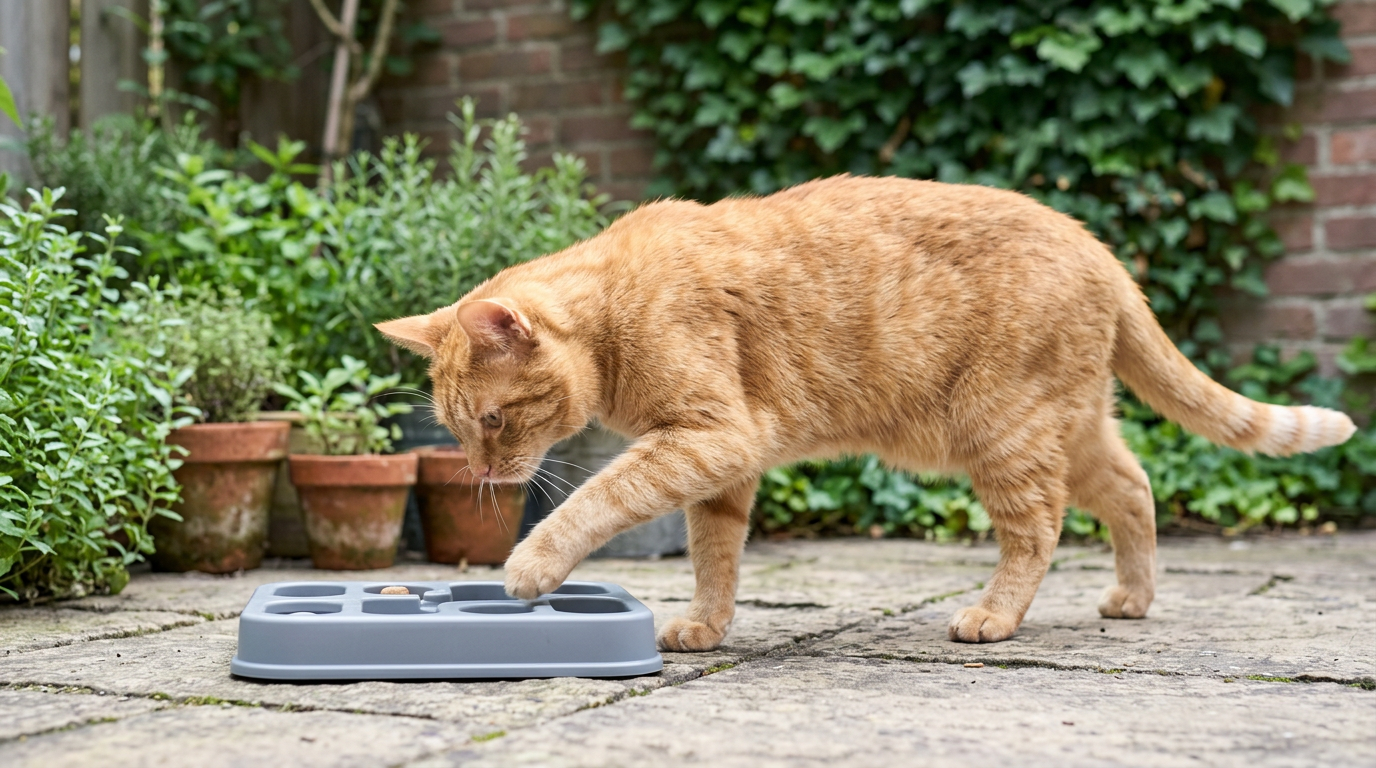
- Consider using food puzzles. Many cats enjoy working for food, and placing small snacks in a puzzle can provide mental engagement along with a treat.
- Turn treats into a search game. Some cats like finding small snacks, but make sure you remember where you placed them so leftovers can be cleaned up.
- Use small pieces of human food as high-value rewards when training your cat to do simple tricks.
Not sure what fits your pet?
Build a simple pet profile and discover treat ideas based on your pet’s needs, preferences, and sensitivities.
Build Your Pet Profile